Neck Lift:
neck and jawline
The neck and jawline often reveal age before the mid-face does. A neck lift addresses this directly — and durably.
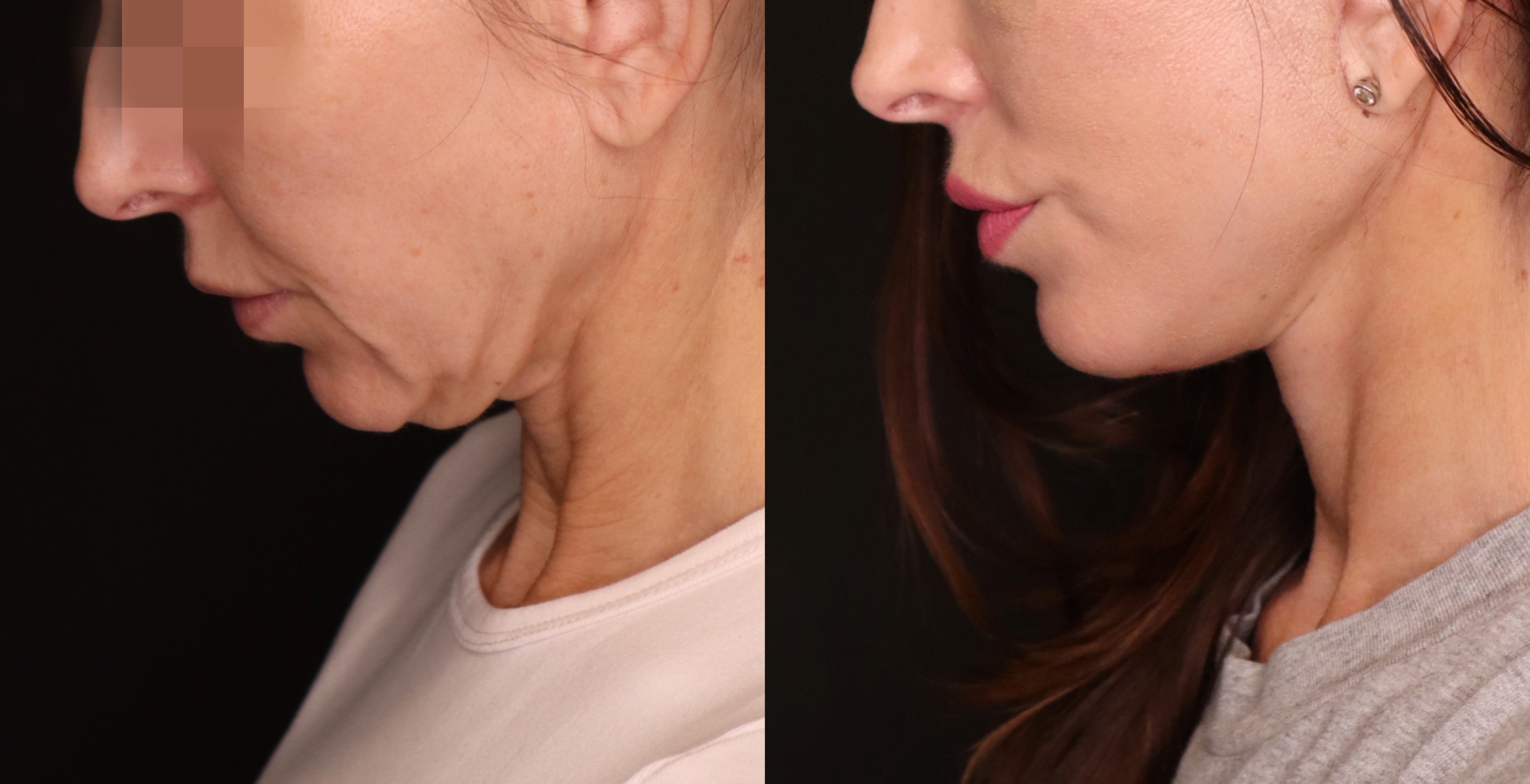
What is a neck lift?
A neck lift is a surgical procedure that corrects changes in the neck and lower face — sagging skin, fat accumulation under the chin and weakened platysma muscles that over time create visible vertical bands or blurring of the line between the neck and chin. Unlike non-surgical treatments, a neck lift addresses the anatomy itself — returning tissue to where it anatomically belongs.
What a neck lift changes
- The jawline — defines and sharpens the lower facial border that softens with age
- The submental zone — removes or repositions fat tissue beneath the chin
- Platysmal bands — the vertical muscle cords that protrude on the neck are addressed directly with sutures
- Neck skin — excess is removed, the remainder redirected without visible traces
Neck lift vs. facelift — what is the difference?
A facelift addresses the mid and lower third of the face — cheeks, nasolabial folds, the jawline. A neck lift focuses primarily on the neck and submental zone. In our practice, these two procedures almost always go together — because the face and neck form an anatomical unit, and treating only one without the other can produce an unbalanced result.
The reason is anatomical. The face ages from top to bottom: the ligaments that hold tissue in position gradually yield, and tissue from the cheeks and jawline migrates downward, eventually accumulating at the neck. The Deep Plane technique addresses precisely these ligaments — their release allows true deep repositioning of tissue, not merely lifting the skin at the surface. Treating the neck without the face means leaving the force that fills it from above completely unaddressed — the result cannot be durable.
Sometimes a patient needs only a neck lift — for example, a younger patient with genetically predisposed fat under the chin and good tone in the rest of the face. Sometimes a facelift alone is sufficient to lift both the lower face and upper neck. The right approach is determined at consultation, based on your specific anatomy.
The standard approach in our practice is Deep Plane facelift + neck lift in a single procedure — one recovery, a harmonious result that treats the face and neck as the anatomical unit they are.
Who are the right candidates?
A neck lift produces the best results in patients who have:
- Visible sagging of skin on the neck or under the chin
- Platysmal bands — vertical muscle cords on the neck
- Excess fat in the submental zone that does not respond to diet
- Loss of a clear line between neck and chin
- Relatively good skin quality — a neck lift repositions tissue but does not change the skin itself
Age is not the primary criterion. Patients in their late thirties with a genetic predisposition and patients in their sixties with pronounced laxity can both be good candidates, with different procedure scopes.
What does the procedure involve?
A neck lift is almost always performed as part of a Deep Plane facelift, through the classic incision in front of and around the ear. This approach allows simultaneous correction of the face and neck in a single procedure — deep tissue repositioning, jawline definition, and neck tightening without tension on the skin.
A separate question in surgical planning is whether an anterior approach is needed — a small incision in the natural crease beneath the chin. This step is added when it is necessary to address the platysma directly and perform deep neck sculpting: precise correction of the muscle and fat in the anterior neck zone that cannot be reached through the lateral approach at the ear. The decision is based on each patient's individual anatomy and is planned at consultation.
The skin itself is not what is "tightened" — the muscle and connective tissue beneath it is. This is the difference between the modern approach and older techniques that produced an unnatural, "operated" appearance.
Recovery
Recovery from a neck lift is shorter than from a facelift but follows a similar pattern. For the first few days the face and neck are swollen and tender; an elastic garment supports the tissue. Swelling and bruising typically resolve over two to three weeks.
Returning to social activities is possible for many patients already in the second week. More intense physical activity waits until the fourth to sixth week, following the post-op check and the surgeon's individual guidance.
The final result — once swelling has fully resolved and tissue has settled into its new position — becomes visible over the following months.
A neck that matches the rest of your face.
At the consultation we assess your anatomy and recommend the right approach — neck lift alone, combined with a facelift, or something else.
Book a Consultation